Best Temples in Singapore
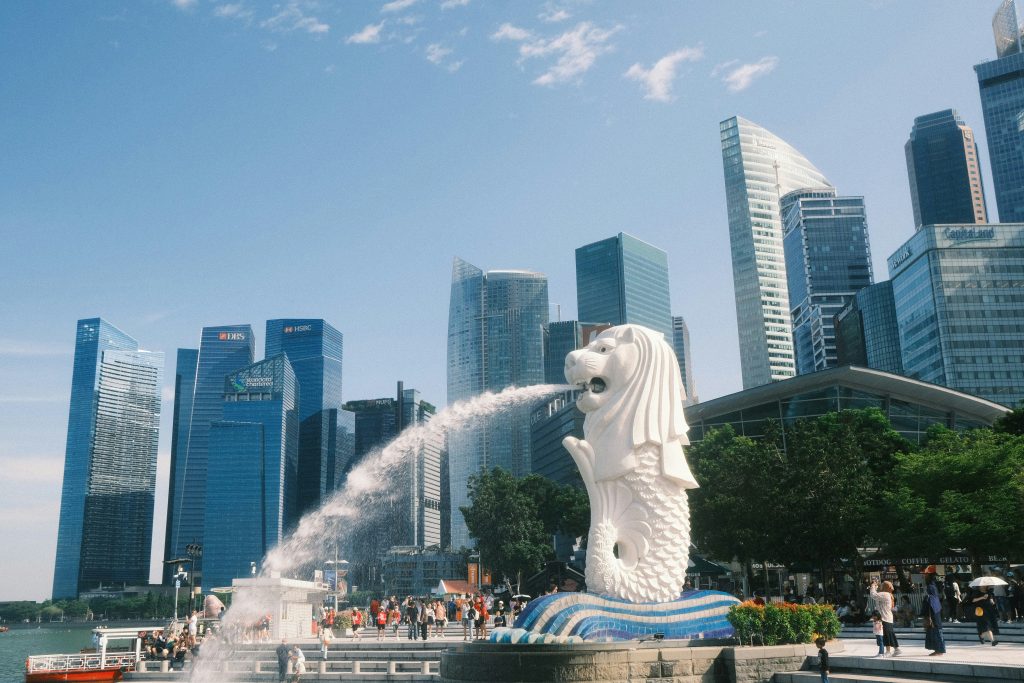
Singapore is not only about skyscrapers, Gardens by the Bay, hawker centres, and an almost perfect transport system, but also a city with a very lively temple culture. Singapore is often seen as an “ultra-modern hub” — yet it has another strong side: temples of different traditions that exist right “inside” the modern city. In a single day, you can visit a Hindu temple with bright gopuram towers, a Chinese temple with incense smoke and a line to fortune tellers, a Buddhist sanctuary with relics and quiet halls — and then find yourself in a district where different religions and cultures coexist side by side.
But there are many temples in Singapore, and on a first trip it’s easy to get overwhelmed: what is truly worth seeing, where it’s most convenient to go if you’re staying in the centre, where 30-60 minutes is enough and where it’s better to allow 1-2 hours — and which places make sense to combine into one district-by-district route without unnecessary travel.
Which temples to choose in Singapore
The most famous in the country
- Sri Mariamman Temple (Chinatown) — the neighborhood’s Hindu “calling card”: a bright gopuram and a strong sense of the city’s living energy.
- Buddha Tooth Relic Temple & Museum (Chinatown) — a Buddhist temple with a museum-style format: convenient if you want “beautiful, and with context.”
- Thian Hock Keng (Telok Ayer) — one of the key Chinese temples of old Singapore, full of carving, details, and history.
The most atmospheric
- Lian Shan Shuang Lin Monastery (Toa Payoh) — a calm monastery courtyard, a little bridge, greenery: people come here for quiet and a “breather.”
- Kong Meng San Phor Kark See (Bright Hill) — a large complex where it’s easy to spend more time than you planned: quiet corners, space, and the feeling of a “separate world.”
The oldest
- Sri Mariamman Temple — historically one of the earliest and most significant temples in the city.
- Thian Hock Keng — a 19th-century temple and one of the key symbols of Singapore’s Chinese heritage.
- Shuang Lin Monastery — also “old” by local standards (late 19th century), but it feels more secluded.
Best if you have little time
Sri Mariamman → Buddha Tooth Relic → Thian Hock Keng
This is the most compact half-day set: three traditions, minimal travel, maximum impressions.
Best in the city center
- Buddha Tooth Relic Temple — easy to combine with a walk around Chinatown and a meal at nearby food courts.
- Sri Mariamman Temple — literally “stitches into” a central route; it doesn’t require a separate trip.
Beyond the tourist classics
- Burmese Buddhist Temple (Balestier) — less hyped, often without crowds; memorable for its unusual character.
- Leong San See Temple (Bukit Timah) — ornate and neat, but usually not on everyone’s default list.
How many days do you need for temples on a first trip?
One day covers the center (Chinatown/Telok Ayer) + another half-day if you want to add one “non-touristy” place.
The Best Temples in Singapore
Center: Chinatown / Telok Ayer / CBD
- Sri Mariamman Temple
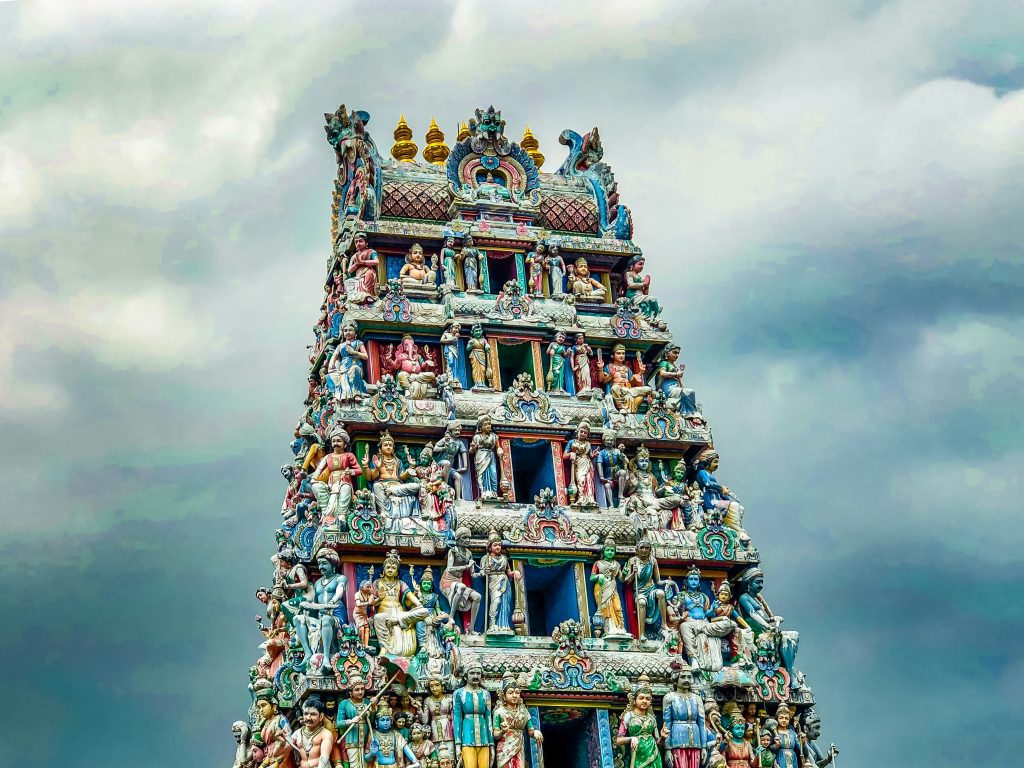
The oldest Hindu temple in Singapore (completed in 1827) and historically served as a place to register Hindu marriages.
Location: Chinatown, South Bridge Road.
How to visit: on your own; MRT (Mass Rapid Transit) Chinatown + 5-10 minutes on foot.
Time to allow: 30-60 minutes (quick visit) / 1-2 hours (if you want to look closely at the details and the courtyard).
Best time of day/week: mornings, weekdays (quieter and fewer tourist groups).
Tickets/donation: entry is usually free; donations are appropriate.
- Buddha Tooth Relic Temple
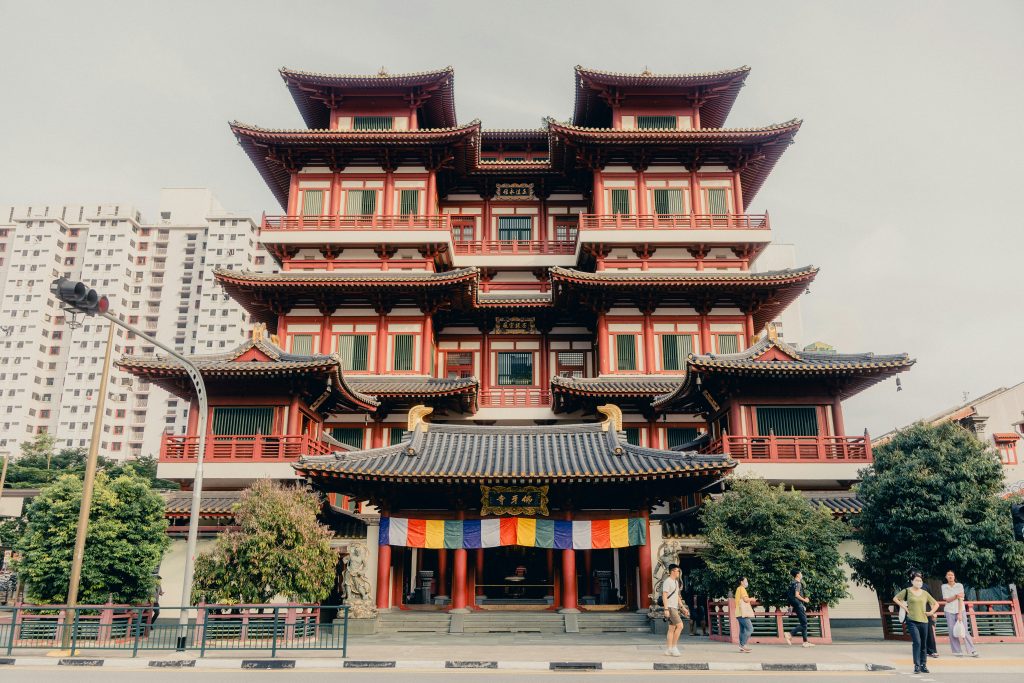
The temple is named after a relic venerated here as Buddha’s tooth; it is housed inside a giant stupa made with 320 kg of gold.
Location: Chinatown.
How to visit: on your own; MRT Chinatown, then walk.
Time to allow: 1-2 hours (temple + museum floors) / 30-60 minutes (main spaces only).
Best time of day/week: morning or weekday daytime (fewer queues and groups).
Tickets/donation: generally free; donations optional.
- Thian Hock Keng Temple
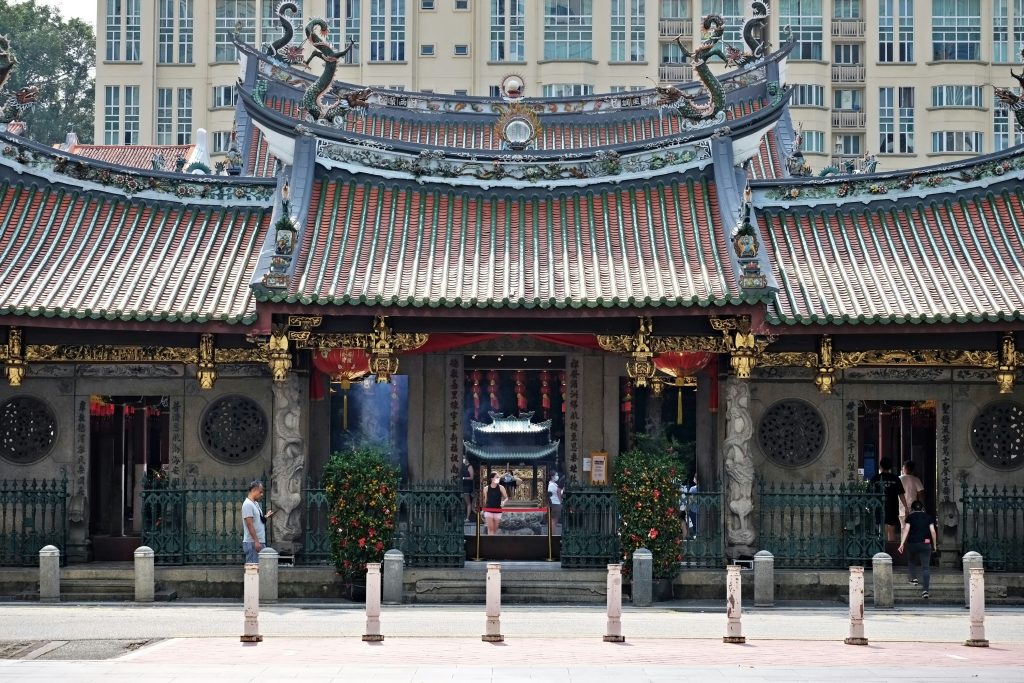
One of the key Chinese temples; its restoration received the UNESCO Asia-Pacific Heritage Award (2001).
Location: Telok Ayer (central part of the city).
How to visit: on your own; MRT Telok Ayer / Raffles Place + a short walk.
Time to allow: 30-60 minutes / 1-2 hours if you want to study the carvings and details.
Best time of day/week: early morning (before the office rush).
Tickets/donation: entry is usually free; donations are welcome.
- Yueh Hai Ching Temple (Wak Hai Cheng Bio)
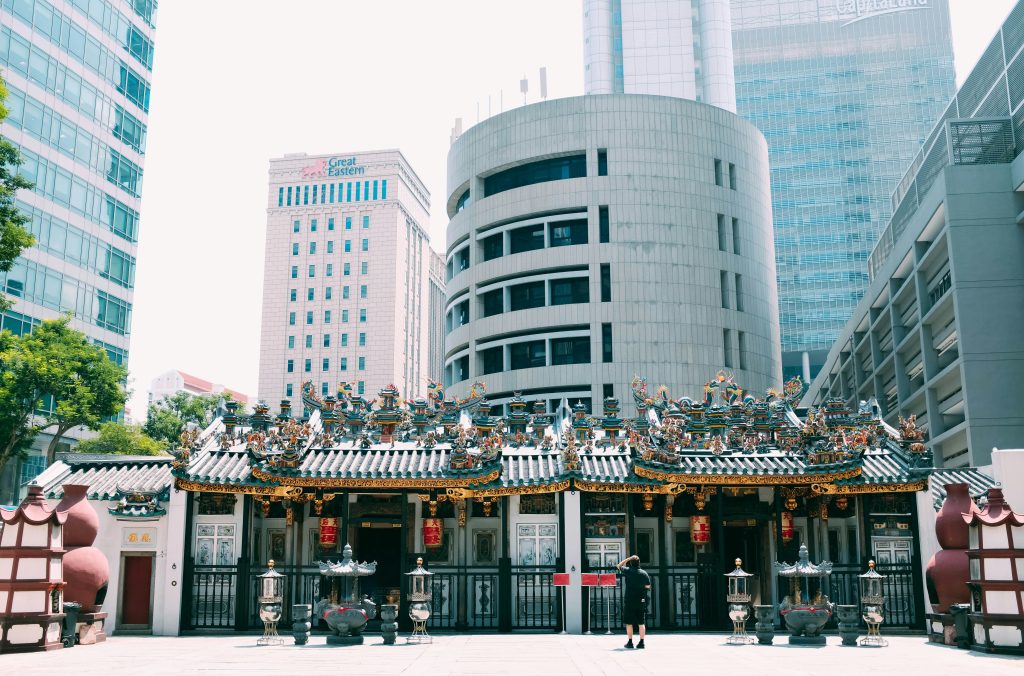
One of the few traditional Chinese temples right in Singapore’s business core. Fun fact: during festivals, they still stage puppet performances in honor of the deities — a rare living tradition in the middle of a megacity.
Location: Raffles Place / CBD area.
How to visit: on your own; MRT Raffles Place + walk.
Time to allow: 20-40 minutes.
Best time of day/week: weekdays before the office peak, or closer to morning.
Tickets/donation: usually free entry; donations optional.
Little India and the Bugis area
- Sri Veeramakaliamman Temple
Considered the first temple in Singapore dedicated to the goddess Kali.
Location: Little India, Serangoon Road.
How to visit: on your own; MRT Little India / Farrer Park + walk.
Time to allow: 30-60 minutes.
Best time of day/week: weekday mornings (more comfortable inside).
Tickets/donation: entry is usually free; donations are appropriate.
- Sri Srinivasa Perumal Temple
One of the oldest temples in the area (1855); its gopuram is noticeably “younger” — added in 1966. The gopuram is so tall and visible that it was designed as a “seen-from-afar” landmark for worshippers, even if they don’t go inside.
Location: Serangoon Road, Little India.
How to visit: on your own; MRT Farrer Park + walk.
Time to allow: 30-60 minutes / 1-2 hours if you want to walk through all the shrines within the complex.
Best time of day/week: morning (before the heat and crowds).
Tickets/donation: usually free entry; donations optional.
- Sakya Muni Buddha Gaya Temple (“Temple of 1,000 Lights”)
A “temple of a thousand lights” built around a 15-meter statue. Because it includes figures close to Hindu tradition (for example, Ganesha), the temple is visited by both Buddhists and Hindus.
Location: Race Course Road (near Little India).
How to visit: on your own; you can walk from MRT Little India or ride a couple of stops.
Time to allow: 30-60 minutes.
Best time of day/week: first half of the day.
Tickets/donation: usually free; donations optional.
- Kwan Im Thong Hood Cho Temple
One of the most popular Guanyin (Goddess of Mercy) temples on Waterloo Street; known for the practice of “cross-worshipping” with the neighboring Sri Krishnan Temple.
Location: Waterloo Street (Bugis/Rochor area).
How to visit: on your own; MRT Bugis / Rochor + walk.
Time to allow: 30-60 minutes (factor in a queue at peak hours).
Best time of day/week: early weekday mornings.
Tickets/donation: usually free entry; donations optional.
Quiet temples outside the center
- Lian Shan Shuang Lin Monastery
Its founding is linked to a legend: after dreaming of a “golden light,” the founder met pilgrim monks by the waterfront and invited them to stay to help develop Buddhism in Singapore.
Location: Toa Payoh.
How to visit: on your own; MRT Toa Payoh + bus/taxi (or Grab).
Time to allow: 1-2 hours (it’s the kind of place for a slow, calm visit).
Best time of day/week: mornings, weekdays.
Tickets/donation: entry is usually free; donations are appropriate.
- Kong Meng San Phor Kark See Monastery
Singapore’s largest Mahayana monastery; one of its symbols is the Pagoda of 10,000 Buddhas.
Location: Bright Hill Road, Bishan.
How to visit: on your own; MRT Bright Hill (TEL) or Bishan + onward transport.
Time to allow: 2-3 hours (the complex is large).
Best time of day/week: morning.
Tickets/donation: usually free entry; donations optional.
Novena / Balestier (near the center)
Burmese Buddhist Temple (Maha Sasana Ramsi)
Known for the largest white marble Buddha statue outside Myanmar.
Location: Novena (Tai Gin Road).
How to visit: on your own; MRT Novena + a short ride/walk.
Time to allow: 45-90 minutes.
Best time of day/week: weekday daytime (usually calmer).
Tickets/donation: most often free entry; donations optional.
Southern part of the city: Pasir Panjang / Mount Faber area
Poh Ern Shih Temple (“Temple of Thanksgiving”)
Originally built as a memorial to those who died in the Battle of Pasir Panjang (1942); later became known as the first religious complex in Singapore with clearly eco- and elder-friendly solutions.
Location: Chwee Chian Road (Pasir Panjang).
How to visit: taxi/Grab is easiest, or MRT + bus (the area is hilly).
Time to allow: 1-2 hours.
Best time of day/week: morning (less heat/humidity).
Tickets/donation: usually free entry; donations optional.
Suggested temple itineraries in Singapore
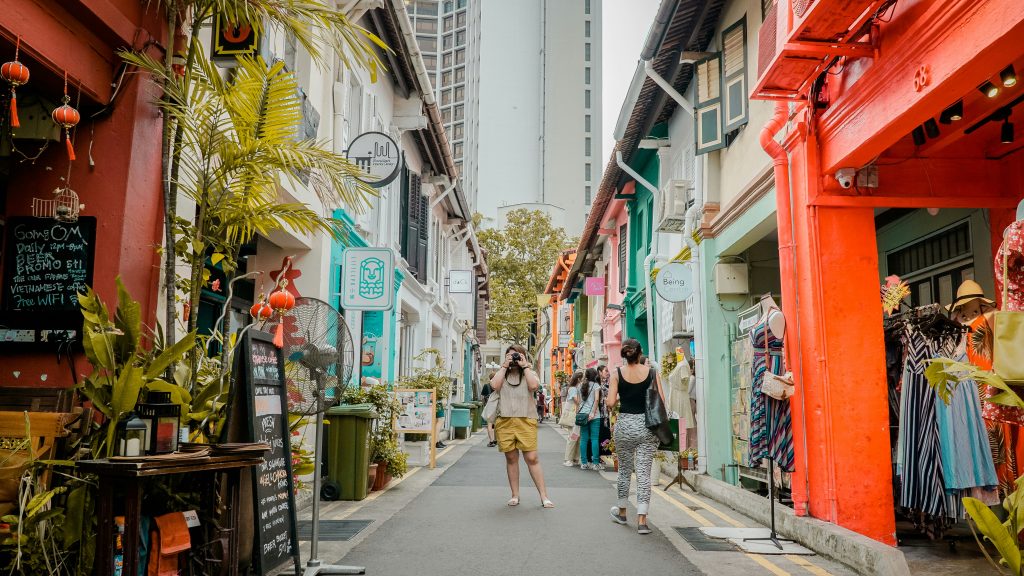
Option A: 3-4 days
Day 1 — Center, maximum sights with minimal travel (half-day to full day)
“Everything nearby” cluster: Chinatown → Telok Ayer → CBD
- Sri Mariamman Temple (30-45 min)
- Buddha Tooth Relic Temple (60-90 min)
- Thian Hock Keng (30-60 min)
- Yueh Hai Ching (20-40 min)
How to get around: take the MRT to Chinatown, then it’s mostly walking + one short MRT hop / short walk toward the CBD.
Best time: weekday mornings.
Day 2 — The most “vibrant” day (half-day to full day)
Little India + nearby
- Sri Veeramakaliamman (30-60 min)
- Sri Srinivasa Perumal (30-60 min)
- Sakya Muni “Temple of 1,000 Lights” (30-60 min)
How to get around: MRT to Little India or Farrer Park, then it’s easy on foot / with short rides.
Best time: morning (easier weather-wise, and calmer inside).
Day 3 — Quiet and monastery vibes (half-day to full day)
Peaceful places outside the center (no crowds)
- Lian Shan Shuang Lin Monastery (60-90 min)
- Kong Meng San Phor Kark See (2-3 hours)
How to get around: MRT + it’s often easiest to use Grab/taxi between the two (simpler and faster).
Best time: mornings / weekdays.
Day 4 (if you have it) — “Beyond the classics,” pick one
Better to choose one option (so you don’t overload the day):
- Burmese Buddhist Temple (45-90 min)
- Poh Ern Shih (60-120 min)
How to get around: usually easiest by Grab/taxi (especially to Poh Ern Shih).
Option B: 7-10 days (no rush)
Day 1:
Sri Mariamman (30-45 min) → Buddha Tooth Relic (60-90 min)
Day 2:
Thian Hock Keng (30-60 min) → Yueh Hai Ching (20-40 min)
Day 3:
Sri Veeramakaliamman (30-60 min) → Sri Srinivasa Perumal (30-60 min)
Day 4:
Kwan Im Thong Hood Cho (30-60 min)
Day 5:
Lian Shan Shuang Lin (60-90 min) → Kong Meng San (2-3 hours)
Day 6:
Burmese Buddhist Temple (45-90 min)
Day 7:
Poh Ern Shih (60-120 min)
Days 8-10 (if you have them):
Revisit your favorite temple early in the morning (a second visit is often better than the first), or add a small temple / a neighborhood “by mood,” without turning it into a race.
Where to stay to make everything easier
If you don’t want to think about logistics, stay in central areas like Bugis / City Hall / Chinatown. The center and most temples will be close, and you’ll only need 1-2 “farther” trips during the whole trip — which is totally fine.
Temple etiquette in Singapore
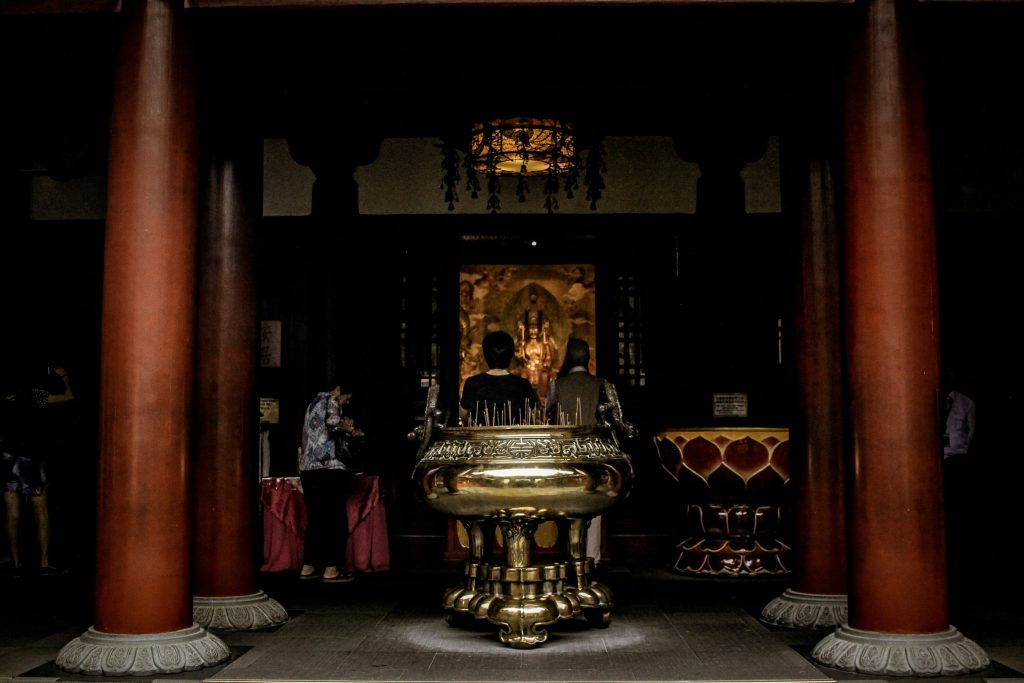
Dress-code
Singapore has temples of different traditions, but when it comes to clothing the rule is simple: it’s better to look a bit more covered than you would for a regular city walk. Covering your shoulders and knees is recommended, especially in Hindu temples and in places with many local worshippers. If you arrive in shorts or a tank top, a scarf or a light wrap can sometimes help, but it’s more reliable to have something of your own. In many temples you’ll need to remove your shoes before entering inner areas — look for shoe racks, signs, and follow what other visitors do. To avoid turning every visit into a “quest,” it’s easiest to wear shoes you can take off and put on quickly.
How to behave inside
The main idea is not to disturb prayer and not to turn the temple into a photo set. Speak more quietly than usual, don’t block walkways, and don’t stand right in front of an altar if people are praying there. Don’t touch statues, altars, or offerings, and don’t move items “for a nicer shot.” If you come across a ritual, it’s best to watch from the side and not walk between the officiant and the altar area. In some traditions, pointing at shrines with your index finger is considered impolite — safer to gesture with an open hand, or simply step closer.
Photos and video
Photography is usually straightforward: in courtyards and public areas it’s typically allowed, but inside sanctuaries restrictions are more common, and during prayer it’s especially important to be tactful. Don’t use flash, don’t film people up close without consent, and don’t push your camera into a ritual. The most reliable guide is the signage at the entrance and how locals behave — if everyone has put their phones away, it’s best to do the same. If you really want to take photos inside, the easiest approach is to ask a staff member or volunteer — people in Singapore generally handle these questions calmly.
If you’re visiting with kids
With children, it helps to explain in advance that a temple is a place where we speak quietly, don’t run, and don’t touch anything — even if it looks bright and tempting. In the heat and humidity kids get tired faster, and incense can feel stuffy, so water and shorter visits work better than trying to “endure” a long tour. The ideal option is to go in the morning and plan 30-45 minutes per temple: your child will see the highlights, and you’ll keep a calm pace without meltdowns or overload.
Practical tips
How to avoid crowds
The most reliable way to see a temple “alive,” not as part of a tourist conveyor belt, is to come in the morning — especially on weekdays. In popular areas like Chinatown (Sri Mariamman and Buddha Tooth Relic) and on Waterloo Street, queues and crowd density rise noticeably closer to midday and on weekends, and even more in the run-up to major festivals. If you want quiet photos and a calmer atmosphere, plan temples for the first half of the day, and keep waterfront walks, markets, and food neighborhoods for the evening — this way the day feels lighter and your impressions are brighter.
Weather and footwear
Singapore is hot and humid, and tropical downpours can start suddenly, so the best “peace-of-mind kit” is water, a light rain layer, and shoes that are comfortable for lots of walking. Temples often have smooth floors, steps, and areas that get slippery after rain, so it’s better to choose footwear with a proper sole and avoid slick platforms. One more nuance: in many places you’ll need to take your shoes off, so something easy to slip on and off works best — and if you’re sensitive to hot floors, thin socks can genuinely save you.
Accessibility and physical effort
Even if a temple is “in the city,” it doesn’t always mean it will be fully convenient for everyone: some have stairs, some involve long walks across the grounds, and some have narrow passages indoors during peak hours. If you’re traveling with older relatives, with a stroller, or you simply don’t want to overdo it, choose temples where the visit fits easily into 30-60 minutes, and don’t hesitate to use Grab/taxis. In Singapore, that’s often not a luxury — it’s a way to save energy and avoid turning the day into a heat-time march.
Common tourist “scams” near popular spots
Singapore is generally safe, but around the most visited areas you can still run into situations that sour the mood. The most typical scenario is inflated “tourist prices” for small items near high-traffic sights, plus pushy offers of “super tours” or a “special blessing” that suddenly comes with a fee. A simple rule works well: don’t agree to services you didn’t actively look for, don’t hand over money “in the moment” under pressure, and don’t fall for stories like “only today / only for you.” If you want to donate, it’s better to use an official donation box inside the temple, or ask a staff member where to do it properly — without unnecessary middlemen.
Final Thoughts
Temples in Singapore are one of those rare cases where a cultural program doesn’t feel like an obligatory box to tick. They genuinely help you see the city more deeply — not only as a perfectly polished showcase, but as a place where different traditions, languages, and rituals live side by side, and somehow it all feels remarkably natural. The nicest part is that you don’t need to be an expert in religions to enjoy it: sometimes it’s enough to come in the morning, slow down, catch the scent of incense, hear bells or prayer chants, and watch how the city “breathes” beyond the tourist rush.